

Here’s something no one tells you when you’re reading a ‘top digital marketing strategies 2026’ listicle: most of them are copy-paste jobs from 2022 dressed up with a new year at the top.
The marketing landscape in 2026 looks nothing like it did three years ago. Google’s AI Overviews now answer queries before users even click. Meta’s ad auction has gotten smarter — and more expensive. Short-form video has cannibalized attention from every other format. And third-party cookies? Largely gone in most environments that actually matter.
We’ve spent the last two years running campaigns for brands across e-commerce, B2B SaaS, local services, and D2C — and what’s working today is very different from what worked before. This isn’t a theoretical breakdown. It’s what we’re seeing in live accounts.
Here are 10 digital marketing methods that are actually producing results in 2026 — plus how to execute them, realistic expectations, and common mistakes to avoid.
1. Why Most Marketing Advice Is Already Outdated
Before diving into tactics, let’s be blunt about something: the majority of ‘digital marketing trends 2026’ articles you’ll find are SEO-optimized summaries of content that was already generic three years ago.
The real shifts that matter right now:
- Zero-click search is real and growing. According to SparkToro’s 2025 data, over 65% of Google searches now end without a click. AI Overviews, featured snippets, and knowledge panels are consuming traffic that used to land on your site. This doesn’t mean SEO is dead — it means SEO strategy has to evolve from ‘rank and wait’ to ‘own the answer layer.’
- The paid media curve has steepened. CPMs on Meta and Google have risen 28–34% year-over-year in most verticals (based on our client account benchmarks). Brands that can’t measure performance tightly are bleeding budget.
- Attention is fragmented beyond what most funnels account for. The average consumer today touches 8–12 brand touchpoints before converting. Building a funnel that assumes a linear path is building a funnel that will disappoint you.
- The good news: brands that understand these shifts are pulling away fast. Here’s how they’re doing it.
2. SEO in the Age of AI Overviews
Search engine optimization is still one of the highest-ROI channels for sustained traffic — but the playbook has changed materially.
What’s Different in 2026
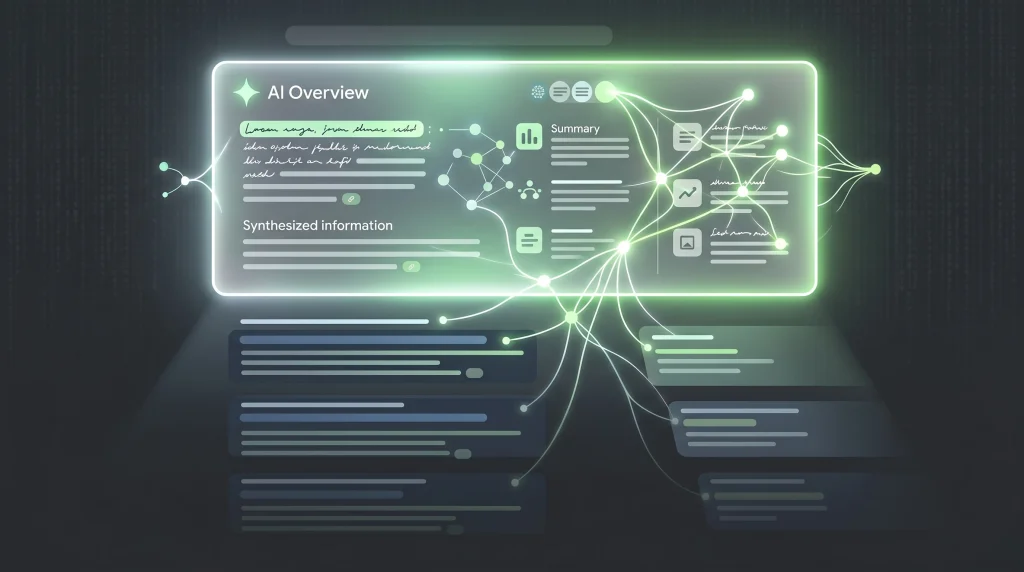
Google’s AI Overviews are already appearing for a lot of informational and transactional queries. This has a dual effect: it reduces clicks on generic content, and it increases clicks on content cited within those overviews. Ranking well now means being the source Google trusts enough to pull from — not just the page that matches keyword density.
This shift has elevated a concept called topical authority. Google doesn’t just evaluate individual pages anymore — it evaluates whether your site demonstrates deep, consistent expertise in a subject area. A site that covers one topic comprehensively outperforms a site with 300 thin pages spread across every topic imaginable.
What’s Actually Working
- Intent-matched content architecture. Each content piece should have a defined search intent, be it informational, navigational, commercial, or transactional. For the sake of both users and crawlers, do not combine intent kinds on a single page.
- E-E-A-T signals aren’t optional anymore. Author credentials, original research, verifiable experience, and brand entity signals now measurably affect ranking outcomes. We are ignoring pages that do not indicate an author or signal expertise.
- Semantic SEO over keyword density. Google’s NLP algorithms recognize the relationships between entities, not just word frequency. Write about connected entities and go human-centric. Stop worrying about keyword numbers.
| Mini Case Study: Organic Traffic RecoveryA D2C supplement brand lost 40% of its organic traffic in a Helpful Content Update. Content was product-focused and thin with no expertise signals. We restructured around three core topic clusters, added practitioner perspectives, built proper internal linking, and published original research. Result: 74% traffic recovery within six months. Average ranking position improved from 18.3 to 9.1 across the core keyword set. |
3. Performance Marketing That Actually Scales
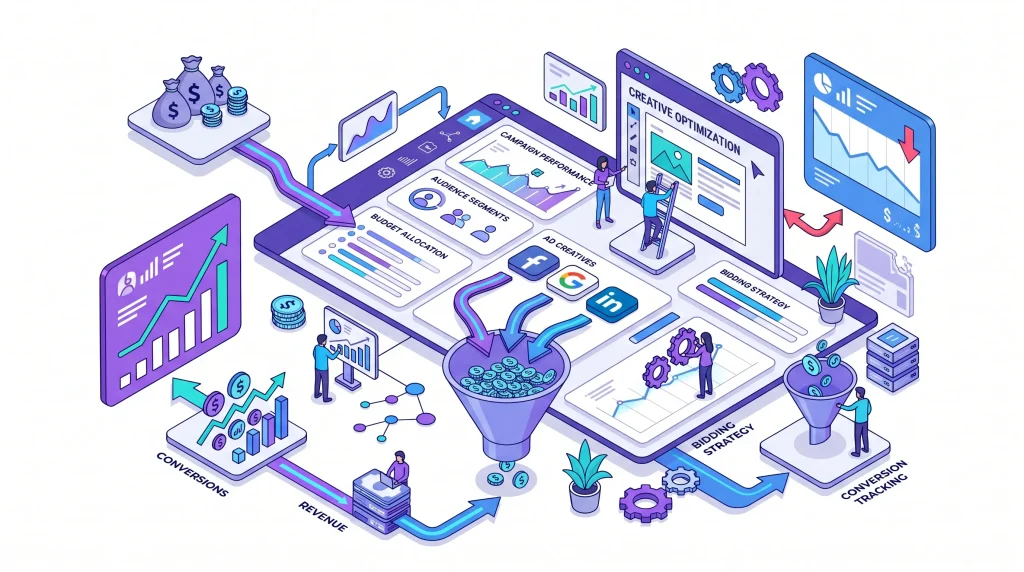
Paid advertising in 2026 is a precision sport. The brands winning aren’t spending more — they’re measuring better, structuring campaigns smarter, and making faster decisions based on clean data.
The Core Problem With Most PPC Campaigns
Most campaigns underperform for one of three reasons: (1) incorrect attribution setup that inflates reported ROAS, (2) creative fatigue going undetected for weeks, or (3) landing pages that have nothing to do with the ad’s promise. Fix these three things, and most accounts improve materially without increasing spend.
What’s Working in Paid Media Right Now
- Google’s Performance Max campaigns, used carefully, strong creative inputs, audience signals, and conversion data, outperform manual campaigns significantly when PMax is fed properly.
- Meta’s Advantage+ Shopping with tight creative testing. Brands seeing 4x+ ROAS on Meta are running 15–20 creative variants per month and killing losers fast.
- Remarketing with sequenced messaging: objection handling first, social proof second, urgency third — not just generic cart abandonment reminders.
Performance Marketing vs Brand Marketing
| Dimension | Performance Marketing | Brand Marketing |
|---|---|---|
| Primary goal | Conversions, leads, revenue | Awareness, perception, recall |
| Measurement | ROAS, CAC, CPA, CVR | Reach, frequency, brand lift |
| Time to results | Days to weeks | Months to years |
| Budget flexibility | High — scales up/down fast | Low — consistency matters |
| Best for | E-commerce, lead gen, SaaS | Established brands, new market entry |
| Risk level | Lower (direct attribution) | Higher (harder to measure) |
| Mini Case Study: Meta Ads ROAS Improvement. A fashion accessories brand was running Meta campaigns at 1.8x ROAS. Issues found: all traffic to a collection page, an 8-month-old creative, and no exclusion audiences. We redesigned with product-specific landing pages, refreshed creative in 4 styles, and created suitable exclusion logic. ROAS increased to 3.4x in six weeks. They increased spending by 40%.” |
4. AI-Powered Personalization at the Funnel Level
People have been talking about AI personalization for years, but it’s finally within reach for non-enterprise firms at a pricing range that makes sense in 2026.
Where AI Personalization Delivers Real ROI
- Email personalization beyond first name. Behavioral segmentation regularly produces 2x–3x improvement in email-attributed revenue versus batch-and-blast approaches.
- On-site personalization. Showing returning visitors a homepage tailored to their previous behavior consistently improves conversion rates by 15–35% in our client tests.
- Predictive lead scoring. Brands using this effectively report 30–50% improvement in sales team efficiency.
What to Avoid
Personalization that feels invasive rather than helpful will backfire. Consumers in 2026 are more privacy-aware than ever. The goal is to feel relevant, not surveilled. Keep personalization experience-led, not data-led.
5. First-Party Data as a Competitive Moat
The third-party cookie deprecation is essentially complete in most high-value browsers and advertising environments. Brands that built first-party data infrastructure over the last two years are now enjoying a meaningful competitive advantage.
What First-Party Data Strategy Looks Like
- Email list building as a core growth lever. Every traffic channel should have a mechanism for genuine value-exchange email capture — tools, content upgrades, quizzes, and early access programs. Brands building 2,000–5,000 new subscribers per month are compounding a data asset that reduces dependence on paid acquisition.
- CRM enrichment and segmentation. Raw email lists aren’t a strategy. The value comes from enriching contacts with behavioral data — views, clicks, purchases — and using it for precise targeting.
- Server-side tracking. For brands spending more than ₹5L/month on paid marketing, server-side event tracking with GTM or Segment is now a standard infrastructure need.
Why This Matters for Paid Media
First-party audiences fed into Meta’s Conversions API and Google’s Customer Match consistently outperform third-party audience segments. Brands with clean CRM data and proper signal sharing are getting better results from the same ad spend than brands flying blind.
6. Short-Form Video With a Conversion Architecture
In 2026, short-form video will be the most popular type of material. Across nearly every audience segment, Instagram Reels, YouTube Shorts, and LinkedIn Videos collectively account for a significant amount of organic reach. The majority of brands, however, treat short-form videos as a brand-awareness play and fail to fully utilize their conversion potential. This demonstrates the expanding benefits of social media marketing for small businesses, where, with the correct approach, short-form content can increase visibility as well as interaction, lead generation, and direct sales.
The Framework That Works
Hook → Value → CTA, engineered for each platform. The first 1.5 seconds determine whether your video gets watched. Your hook has to be immediate, specific, and relevant to the viewer’s pain or interest. Then deliver the value — teach something, demonstrate something, show a result. The CTA should match platform behavior.
Short-Form Content Type Performance
| Content Type | Avg. Engagement | Conversion Potential |
|---|---|---|
| Educational how-to | High | Medium–High |
| Product demo | Medium | High |
| Customer testimonial | Medium | High |
| Behind-the-scenes | High | Low–Medium |
| Trend-jacking content | Very High | Low |
| Founder/expert POV | High | High |
7. Marketing Automation That Nurtures, Not Spams
Email automation has been around long enough that most brands have some version of it set up. But the quality gap between basic automation and high-performance automation is enormous — and it’s directly reflected in revenue.
The Automation Workflows Actually Worth Building
- Welcome sequence (Days 1–10). Your highest-leverage automation. A six-email welcome sequence that tells your story, delivers value, addresses objections, and makes an offer will outperform any other single automation investment.
- Abandoned cart/checkout recovery. Three-email sequence: immediate reminder → social proof at 24hr → urgency or incentive at 48–72hr. Brands doing this well recover 15–22% of abandoned checkouts.
- Post-purchase nurture. A post-purchase sequence covering onboarding, cross-sell suggestions, review requests, and loyalty program information typically increases the second-purchase rate by 25–40%.
- Re-engagement campaigns. A properly structured re-engagement campaign reactivates 10–15% of dormant lists and keeps your deliverability metrics clean.
The Tool Isn’t the Strategy
We see brands pay for Klaviyo, HubSpot, or ActiveCampaign and then implement only basic flows. Strategy and copy quality matter far more. A simple platform with smart segmentation and strong copy will outperform an expensive platform with generic automations every time.
8. Conversion Rate Optimization as a Discipline
Traffic is a rented asset. Your website is owned. CRO is the discipline of getting more value from traffic you’re already paying for — and it’s chronically underinvested.
The Conversion Killers We See in Almost Every Audit
- Page speed. A one-second delay in page load time reduces mobile conversion rates by approximately 20%. Most brands know their site is slow. Few treat it with the urgency it deserves.
- Vague value propositions. Your hero section has roughly 3 seconds to answer: What is this? Who is it for? Why should I care? If a first-time visitor can’t answer those without scrolling, you’re losing conversions.
- Trust signals placed after the fold. Reviews, certifications, client logos, and security badges work best near the point of friction — not buried at the bottom of a page most visitors never reach.
- Forms that ask for too much, too early. Every additional field in a lead form reduces completion rate. Top-of-funnel: name, email, one qualifying question — that’s it.
| Mini Case Study: Landing Page OptimizationA B2B SaaS company was running Google Ads to a homepage with a 1.1% conversion rate on demo requests. We built dedicated landing pages per ad group, rewrote the headline hierarchy, added five customer logos above the fold, simplified the form to three fields, and improved load time from 4.8s to 1.9s. Conversion rate improved to 3.7% (up 236%) on the same ad budget. Customer acquisition cost down from Rs 12,400 to Rs 4,900 |
9. Content Marketing Designed Around Topical Authority
Content marketing in 2026 has two modes: content that builds topical authority and ranks, and content that fills a blog page and doesn’t. Most businesses are producing the latter.
The Topical Authority Framework
- Identify your core topic clusters — 4–6 subjects your brand can own. Every piece of content maps to one cluster.
- Build pillar pages that dominate the topic comprehensively — definition, types, channels, measurement, tools, common mistakes, case studies.
- Cluster content connects to the pillar page, establishing topical depth that Google’s algorithm favors.
- Your original facts and expert point of view differentiate you. Generic content has essentially zero SEO value in 2026.
10. Local SEO for Businesses That Need Proximity Traffic
For businesses that serve specific geographies — restaurants, clinics, law firms, retail, real estate, home services — local SEO is the highest-ROI digital investment available, and it’s frequently underutilized.
What Moves Local Rankings in 2026
- Google Business Profile (GBP) optimization. Complete profiles with regular posts, accurate categories, response to reviews, and Q&A sections consistently outrank sparse profiles in local pack rankings.
- Review velocity and emotion. Google’s local algorithm cares about both the number AND the recency of reviews. Review generation has to be a continual activity, not a one-off push.
- Local content & entity signals. Landing pages for specific service regions, references to local landmarks, and citations from locally relevant directories all help reinforce local relevance.
| Mini Case Study: Local SEO GrowthA dental clinic in South Delhi was getting fewer than 30 website visitors/month from organic search. We optimized their GBP, built two service-area landing pages, implemented a review generation workflow, and created four local-focused blog posts. Within four months: 380 monthly organic visits, 47 GBP calls/month (up from 8), and a 3.1x increase in new patient inquiries. |
Best Channels by Business Type
| Business Type | Primary Channels | Secondary Channels | Lowest Priority |
|---|---|---|---|
| E-commerce | Google Shopping, Meta Ads, Email | SEO, Influencer | Twitter/X |
| B2B SaaS | Google Search, LinkedIn, SEO | Email, Webinars | TikTok |
| Local Services | Local SEO, GBP, Google Ads | Meta Ads, Email | |
| D2C Brand | Meta Ads, TikTok, Email | SEO, YouTube | |
| Hospitality | Google Hotels, Meta, SEO | Instagram, Email | |
| Professional Services | SEO, LinkedIn, Google Ads | Content, Email | TikTok |
| EdTech | YouTube, SEO, Google Ads | Meta, Email | Twitter/X |
How to Allocate Your Marketing Budget in 2026
Early-Stage Brand (₹50K–₹2L/month)
- 50% performance marketing (Google/Meta) — drive revenue fast
- 25% SEO and content — build long-term organic asset
- 15% email and automation setup — nurture what you capture
- 10% testing and creative — learn what resonates
Growth-Stage Brand (₹2L–₹10L/month)
- 40% performance marketing — scale what’s working
- 25% SEO and content — expand topical authority
- 20% brand building (video, awareness) — reduce future CAC
- 15% CRO and analytics — improve efficiency of existing spend
Established Brand (₹10L+/month)
- 35% performance marketing
- 20% brand marketing
- 20% SEO and content
- 15% CRO and data infrastructure
- 10% experimentation and emerging channels
Common Digital Marketing Mistakes Killing ROI
- Measuring ROAS without accounting for blended CAC. Platform-reported ROAS is almost always inflated. Look at blended CAC and new customer CAC as your real health metrics.
- Publishing content without a distribution plan. ‘Publish and pray’ doesn’t work in 2026. Every piece of content needs an email distribution, social repurposing, and link outreach plan.
- Sending paid traffic to your homepage. This is one of the most common and most expensive mistakes. Traffic acquisition costs money. A landing page misaligned with the ad’s promise wastes it.
- Ignoring mobile experience. Over 70% of traffic for most consumer brands is mobile, yet most CRO audits reveal a desktop-first design mentality.
- Chasing vanity metrics. Impressions, reach, and follower counts tell you almost nothing about business outcomes. Focus on CVR, CAC, LTV, ROAS, and pipeline velocity.
How to Measure ROI the Right Way
| Metric | What It Tells You | What It Doesn’t |
|---|---|---|
| ROAS | Revenue per rupee spent | Profitability, new vs returning |
| CAC | Cost to acquire a customer | LTV context |
| LTV: CAC Ratio | Business model health | Channel-level attribution |
| Blended ROAS | True campaign efficiency | Creative/audience breakdown |
| CVR | Landing page effectiveness | Traffic quality |
| Email Revenue | Email contribution to sales | Channel interaction effects |
The north star metric for most brands is the LTV: CAC ratio. Brands growing sustainably are targeting 3:1 to 5:1 ratios. Attribution modeling matters more than the tools — even a rough first-touch/last-touch comparison gives more signal than relying on a single model.
What Are the Best Digital Marketing Tools for 2026?
| Function | Tool Category | Examples |
|---|---|---|
| SEO research | Keyword + competitor analysis | Ahrefs, Semrush, Search Console |
| Content creation | AI-assisted writing | Claude (Anthropic), Jasper |
| Email marketing | Automation + segmentation | Klaviyo, ActiveCampaign, Mailchimp |
| CRM | Contact + deal management | HubSpot, Zoho, Salesforce |
| Paid media | Campaign management | Google Ads, Meta Business Suite |
| Analytics | Performance tracking | GA4, Looker Studio |
| Landing pages | Conversion optimization | Unbounce, Instapage, Webflow |
| Social scheduling | Content distribution | Buffer, Later, Publer |
| Heatmaps/CRO | UX and conversion research | Hotjar, Microsoft Clarity |
| Data pipeline | First-party data | Segment, GTM server-side |
Frequently Asked Questions
Q1. What is the fastest ROI digital marketing strategy in 2026?
High-intent paid search (Google Ads) is usually the fastest to ROI, frequently within 2-4 weeks. The catch? You need the right landing page infrastructure and conversion tracking. If you don’t have those, you’re paying for data, not results.
Q2: What should a small firm spend on digital marketing in 2026?
A working digital marketing budget is usually 8–12% of sales. There is a minimal sustainable floor of about ₹50,000/ month to run any single channel satisfactorily. Under that barrier, concentrate on one channel – either local SEO or one paid media platform – not both.
Q3. Are AI Overviews Stealing Traffic and Making SEO a Waste of Time?
Yes, but the strategy is different. If you are acknowledged in an AI Overview, that’s a good thing. The AIs are based on reputable sources. Those brands that build subject authority, acquire quality links, and provide truly useful content will win with AI Overviews. It’s the generic, weak substance that’s hurting.
Q4: What is the effect of AI on digital marketing in 2026?
Digital marketing is being impacted by Artificial Intelligence in four areas: (1) Search behavior — AI Overviews redefine what queries are clicked; (2) Content production — AI-assisted creation becomes the default; (3) Campaign management — Platforms apply AI to bidding and targeting; and (4) Personalization at scale. Winning brands are adopting AI as a strategy force multiplier, not a strategy substitute.
Q5: How do I increase my website’s conversion rate?
Perform a conversion audit. Where are users abandoning? Does your page load in? Do you make sense in three seconds value proposition? Priorities: Page speed, headlines, trust signals above the fold, CTA placement, form simplicity. Test one modification at a time and compound your learnings.
Q6: How long does SEO take to show results?
New domain: traffic takes 6-12 months to be meaningful. Established domain solving technological problems or filling a gap: 2-4 months. Local SEO (GBP optimization + local content): 6-10 weeks for measurable increase. SEO is the only channel that gets better over time without a linear increase in expenditure.
Conclusion
Digital marketing in 2026 rewards clarity over cleverness. The brands pulling away from their competitors aren’t doing more things — they’re doing the right things better.
That means understanding your customer’s decision journey before picking channels. It means measuring what actually connects to revenue rather than what’s easy to report. It means building owned assets — email lists, content libraries, first-party data — rather than renting attention from platforms indefinitely.
The 10 strategies in this article aren’t new ideas. They’re proven approaches that are working right now, in live campaigns, for real businesses. The difference between brands that see results and brands that don’t is rarely the strategy — it’s the execution.
If you’re not sure where to start, start with one channel and do it properly. One well-managed Google Ads account with smart landing pages and clean conversion tracking will teach you more about your customers and your CAC than twelve months of half-measures across six platforms.
