And why everything you’ve been told about it might be wrong.
Let me be honest with you upfront. Most businesses come to me frustrated. They’ve been publishing blog posts every week for six months, maybe more. Traffic is flat. Rankings haven’t moved. And somewhere along the way, someone told them to just “do SEO” — as if that’s a complete sentence.
I’ve worked across ecommerce brands, furniture businesses, jewellery websites, MEP companies, digital marketing agencies, and many more. The single most common thing I find across all of them? A blog section that’s technically alive but practically invisible. Posts that exist but don’t serve anyone — not users, not search engines, not the business.
This article is for you if you’ve ever stared at your Google Search Console and wondered why nothing’s happening. I’ll explain what SEO actually means in plain language, what most people get wrong, and what we’d tell you if you hired us tomorrow.
Why Most Businesses Misunderstand SEO
Here’s how most business owners think about SEO: I publish content with the right keywords, Google finds it, and people visit my site.
It’s not wrong, exactly. It’s just dangerously incomplete.
The word “optimise” in Search Engine Optimisation is doing a lot of heavy lifting. Most people interpret it as: stuff your target keyword in a few places, write five hundred words, hit publish. That was the game in 2012. In 2026, that approach doesn’t just fail — it actively signals to Google that your site isn’t worth trusting.
Here’s the bigger misunderstanding, though: businesses treat SEO as something you do for Google. In reality, Google is just the middleman. The end goal has always been the person sitting at a laptop at 11 pm searching for an answer. SEO is your system for making sure that a person finds you — and more importantly, finds what they were actually looking for.
When I audit a website and its blog, I’m not just looking at keyword density or title tags. I’m asking: does this content genuinely help someone? Is there any reason for a first-time visitor to trust this brand? Would I come back to this site?
Most of the time, the honest answer is no.
What SEO Actually Means Today
Let me give you a clean, simple definition before we go further:
SEO is the ongoing process of making your website easy to find, easy to trust, and genuinely useful to the people searching for what you offer.
That’s it. Everything else — keywords, backlinks, Core Web Vitals, structured data — is just the machinery that supports those three goals.
The reason this matters is that Google, over the last several years, has gotten remarkably good at measuring trust and usefulness. Its systems are designed to answer one question: Can I confidently send a user to this website without embarrassing myself?
If your site feels thin, self-promotional, or shallow, Google figures that out. Not always immediately, but eventually.
What Google rewards in 2026 is closer to what a good editor rewards: depth, originality, credibility, and relevance to the reader’s actual question.
Why Search Intent Is the Part Everyone Skips
This is probably the single biggest mistake I see, and I see it constantly.
A business wants to rank for “best sofa sets in Delhi.” So they write a blog called “Best Sofa Sets in Delhi” and list their own products. The keyword is there. The phrase is there. The page does nothing.
Why? Because someone searching “best sofa sets in Delhi” is comparison shopping. They want to see options, prices, pros and cons, maybe some reviews. They are not looking for a brand to tell them that their own sofas are the best. That’s not a content strategy — that’s an advertisement pretending to be an article.
Search intent is the why behind a search query. Is the person trying to learn something? Buy something? Compare options? Find a specific website?
When you understand intent, everything changes. You stop writing what you want to say and start writing what someone actually needs to read. That shift — from brand-first to user-first — is where real SEO begins.
I use a combination of tools like Ahrefs and Semrush, not just for keyword data but also to understand what kind of content is already ranking for a given query. If the top results are all comparison guides, writing a product page won’t work. If the top results are how-to tutorials, a listicle won’t cut it. The format matters as much as the topic.
What I Actually Find When I Audit Client Websites
After working across several verticals, I’ve noticed that the problems are almost always the same, just wearing different costumes.
- Blogs that exist for the wrong reason. Content written because “we need to blog regularly,” not because there’s a genuine user question being answered. These posts have nothing to say to anyone.
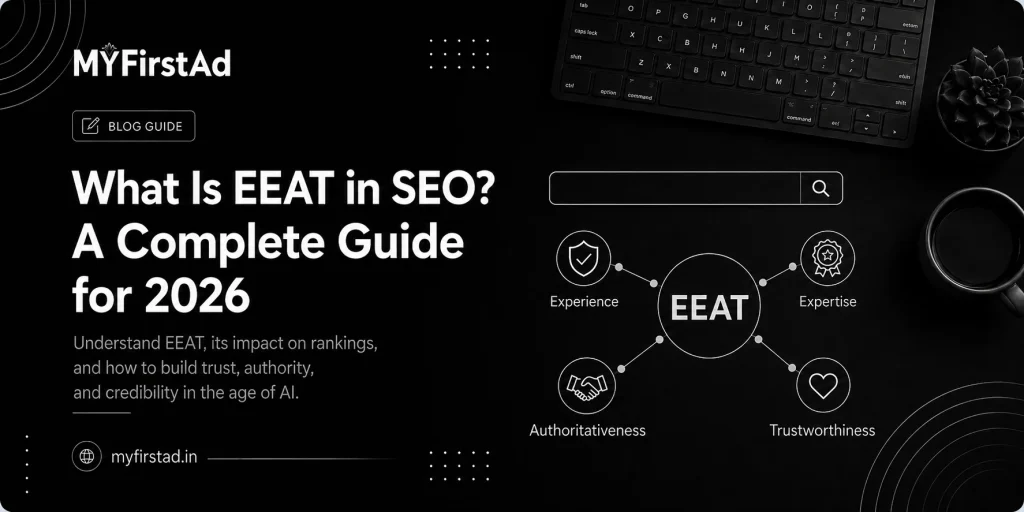
- Zero trust signals. No author byline, no expertise demonstrated, no references, no real-world examples. Just paragraphs of text floating in a void. Google’s EEAT framework — Experience, Expertise, Authoritativeness, and Trustworthiness — specifically looks for signals that the content was written by someone who actually knows what they’re talking about. Generic blogs fail this instantly.
- Weak internal linking. Pages exist in isolation. A post about diamond solitaire rings doesn’t link to the buying guide. The buying guide doesn’t link to the product category. Every page should be part of a deliberate navigation system that keeps users moving through your site.
- Self-promotional writing. I once reviewed a digital marketing agency’s blog where every third sentence circled back to how great their services were. That’s not content — that’s a brochure. Users close it. Google notices.
- No structure. Walls of text with no headers, no visual breaks, no clear hierarchy. Even if the information is good, unformatted content is exhausting to read online.
These issues might sound minor in isolation. Together, they explain why a website can publish 30 blog posts and see no meaningful growth.
A Real Example: The “Best Performance Marketing Agency in Delhi” Problem
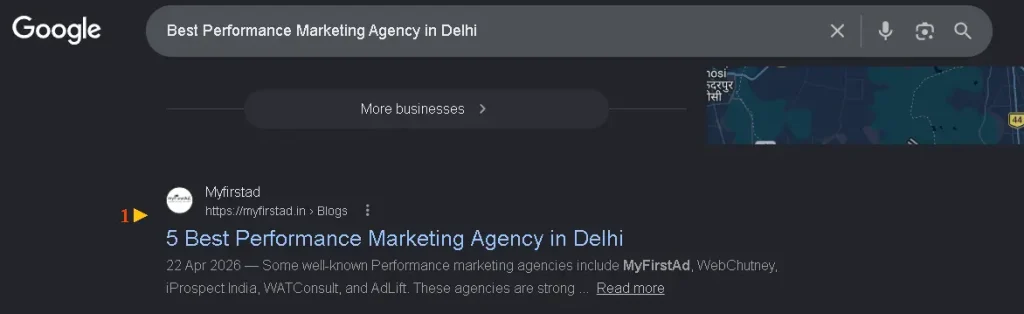
Let me tell you about a specific piece of content I worked on — a page targeting the query “Best Performance Marketing Agency in Delhi.“
When I first looked at it, the page had roughly 400 words, no subheadings, no external references, no internal links going to or from it, and the writing read like a company awards speech. It was essentially a firm telling the world it was excellent. No evidence. No context. No reason for a stranger to believe it.
The issues were clear:
- Thin content that gave users nothing to work with
- No trust signals — no team credentials, no case study references, no data
- The intent of the query wasn’t properly addressed (someone searching this wants proof, not claims)
- Complete isolation from the rest of the site’s content ecosystem
Here’s what we changed. We rebuilt the page around what someone actually wants to know when searching that phrase — which is: what separates a good performance marketing agency from a bad one, and does this one qualify?
We added proper structure. We explained what metrics are important, how performance marketing actually operates, and what clients should consider when assessing companies. We included EEAT signals, which link to pertinent supporting content on the website and reference particular experience areas. We built internal links from related pages and created outbound references to credible industry sources. We made the page part of a topical cluster rather than a standalone orphan.
The result was a page that felt genuinely useful rather than self-congratulatory. Rankings improved, impressions climbed, and — more importantly — users actually stayed on the page.
None of that required a magic formula. It required understanding what the user was looking for and building content that delivered it honestly.
Why Is My Website Not Ranking Despite Publishing Blogs?”
This is probably the most common question I get, and I always answer it the same way.
Your content isn’t ranking because it isn’t giving people what they came looking for. That sounds blunt, but it’s the truth. Publishing consistently means nothing if what you publish doesn’t match what your audience needs. A blog post that talks around a subject, fails to answer the core question, doesn’t demonstrate any expertise, and offers no reason for trust — that post isn’t competing. It’s just taking up server space.
Users have options. When they land on a page that doesn’t quickly signal this is the right place, they leave. Google measures that. It measures how long people stay, whether they click through to other pages, and whether they come back. All of that behaviour feeds into how Google evaluates whether your content deserves to rank.
The fix isn’t to publish more. It’s to publish better, which usually means publishing less, but with considerably more depth and intent behind each piece.
Does AI Content Hurt SEO?
I get asked this constantly, especially now.
The short answer: no. Not inherently. Google has been clear that it doesn’t penalise content for being AI-assisted. What it penalises is content that is unhelpful, thin, and clearly created to game rankings rather than serve users. The fact that AI was involved is irrelevant. The quality of the output is everything.
I’ve seen AI-assisted content rank well. I’ve also seen it at tank sites. The difference isn’t the tool — it’s whether someone with genuine expertise shaped the output into something useful.
Publishing a raw AI draft without editing, without adding real experience, without fact-checking, without adjusting for your specific audience — that’s where things go wrong. Not because Google detects AI, but because the content is usually generic, structurally weak, and devoid of the kind of specific insight that makes a reader trust a source.
Use AI if it helps you work faster. Just don’t confuse speed with quality.
What Businesses Should Actually Focus On
If I were building an SEO strategy for a business from scratch right now, here’s the order I’d approach it:
1. Build trust first. Make sure your website seems and feels like an actual business before worrying about keywords. Genuine testimonials, contact information, expert demonstration, authentic team information, and clear branding. Brands are trusted by Google more than nameless websites.
2. Generate brand demand. If people are searching your brand name, that’s a signal Google values heavily. Invest in awareness — social media, word of mouth, PR, community presence. Brand searches are a quality signal that feeds into organic visibility.
3. Build topical authority. Go deeply into a core group of subjects that are pertinent to your audience. Establish content clusters in which several pages complement and connect. The objective is not to have the most posts, but to be the most thorough and reliable resource in your niche.
4. Solve real problems. Each piece of information needs to address a legitimate query posed by actual people. To find out which questions are already directing visitors to your website, use Google Search Console. To find out what your audience searches for, use Ahrefs or Semrush.
5. Get the structure right. Great content, poorly structured, still underperforms. Use clear headings, short paragraphs, relevant images, and a logical flow. Make it easy to read on a phone. Internal linking should be intentional — every page pointing toward related pages, creating a web of relevance.
6. User experience isn’t optional anymore. Page speed, mobile performance, Core Web Vitals — these aren’t technical nice-to-haves. They’re table stakes. A slow, broken mobile experience will drag down otherwise good content.
SEO Practices That Are Quietly Hurting Websites in 2026
A few things that are still surprisingly common and still damaging:
- Keyword stuffing. Repeating the target phrase six times per paragraph doesn’t signal relevance — it signals desperation. Modern NLP means Google reads for meaning, not repetition.
- Publishing unedited AI content at scale. Churning out fifty AI-generated articles a week sounds productive. In practice, you’re building a content graveyard and potentially triggering Google’s helpful content systems.
- Buying backlinks is still happening, still risky. Links from irrelevant, low-quality sources are, at best, useless and, at worst, a liability. Earn links through genuinely useful content, partnerships, and digital PR.
- Ignoring who you’re writing for. Writing for a search engine’s algorithm is a losing game because the algorithm is designed to reward writing for humans. Prioritise the reader, and the rankings tend to follow.
- Generic listicles with no depth. “10 Tips for Running a Better Business” has ten shallow bullet points that nobody could find in thirty seconds on Google. These don’t rank, they don’t get shared, and they waste your content budget.
- Ignoring site performance. I’ve audited websites with genuinely good content that were invisible in search because the site took eight seconds to load on mobile. That’s not an SEO problem — it’s a priority problem.
Frequently Asked Questions
How long does SEO take to show results?
Honestly, there’s no fixed answer — and anyone who gives you an exact number is guessing. In my experience, most websites start seeing measurable movement between three to six months after making meaningful changes.
What is EEAT in SEO, and how do I improve it?
EEAT in SEO means Experience, Expertise, Authoritativeness, and Trustworthiness. Google uses EEAT to check if your content is written by someone who knows the topic and provides real value to users. You can improve EEAT in SEO by sharing real experience, writing helpful and accurate content, adding author details, and building trust through quality backlinks and a secure website.
What is topical authority, and how do I build it?
Topical authority means being the most comprehensive, credible resource on a given subject in your niche. You build it by creating a cluster of interlinked content around core topics rather than writing about everything loosely related to your industry.
Is buying backlinks still harmful in 2026?
Yes, and the risk has only grown. Buying backlinks from irrelevant, low-quality sources can trigger manual penalties or algorithmic devaluation. Google’s link assessment has become sophisticated enough to distinguish between links earned through genuine authority and links purchased from link farms. Beyond the penalty risk, paid links from irrelevant sites simply don’t pass the kind of trust signal that moves rankings.
How much do SEO agencies in Delhi charge for SEO services?
The pricing of SEO agencies in Delhi depends on your business goals, competition, and the services included. Some agencies offer affordable monthly packages for small businesses, while larger companies may need more advanced SEO campaigns.
Final Thoughts
SEO in 2026 is not complicated, but it does require honesty. Honest about whether your content is actually useful. Honest about whether your website gives strangers a reason to trust you. Honest about whether you’re creating things for your audience or for an algorithm that you’ve already outsmarted yourself in understanding.
The businesses I’ve seen grow through SEO — the ones that went from invisible to consistently ranking — shared one thing. They stopped asking “how do I trick Google?” and started asking “how do I genuinely help the person searching this?”
That shift sounds simple. It’s harder than it looks, because it means letting go of content that exists to promote yourself and building content that exists to serve someone else. But when you get it right, it compounds. Rankings improve, trust grows, users return, and your brand becomes the answer people find when they’re searching for exactly what you offer.